
A compliant, safe and functional hot water system — installed and certified.
Home Assist only does geyser replacements that leave the home compliant. Every installation is issued with a certificate of compliance. Start with the warranty check — it is free, and it may mean you do not need to buy anything at all.
Not replacing yet? Check whether your geyser is still under warranty — free, and it may mean you do not need to buy anything.
Five things a compliant geyser installation has
If any one of these is missing, the installation is not finished — whatever it cost and whoever signed it off.
Issued by a registered plumber on completion and logged. Your insurer can ask for it, and without one an installation is not finished.
A pressure control valve matched to the rating of the cylinder that was actually fitted, not to whatever was in the van.
Piped to a visible discharge point, so a leak shows itself outside the house instead of soaking through your ceiling.
Fitted above the cylinder on both hot and cold, so the tank cannot siphon itself empty and burn out the element.
A dedicated breaker on the distribution board, and an isolator within one metre of the cylinder.
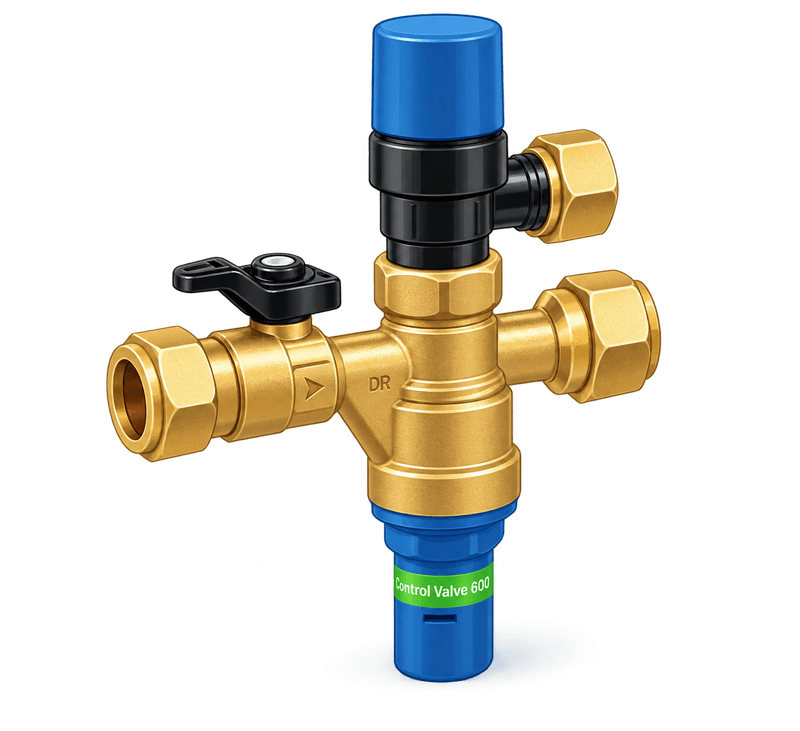
Water sediment collects in the strainer on the pressure control valve, and a blocked strainer makes the valve drip more than it should. That looks like a failing geyser and it often is not one — so a dripping overflow is worth having looked at before anybody quotes you for a new cylinder.
When the cylinder genuinely is being replaced, the valve gets replaced with it. That is good practice rather than an upsell: the valve pressure may never exceed the cylinder pressure, so a valve carried over from the old installation can be wrong for the new one.

First — check if your geyser is still under warranty
Most geysers carry a five-year manufacturer warranty. If yours is still covered, the replacement may cost you nothing. Send us a photograph of the plate on the side of your cylinder and we will decode the manufacturer and date code and check it for you at no charge.
If you are claiming, or your insurer has settled in cash and asked you to appoint your own plumber, we can verify the quote and the work as well.
Would rather not use WhatsApp? Email the brand, serial number and rough installation year to [email protected] and we will come back to you.
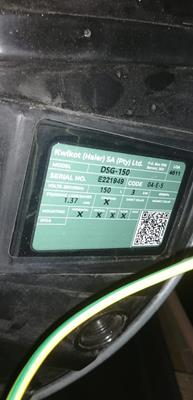
The plate is on the side of the cylinder, usually near the pipework. One clear photograph is enough.
Five questions for same-day service
Nothing is gated and nothing is compulsory. Every answer is one less thing to establish on the phone, and knowing the position and the access up front is what lets us arrive with the right unit, the right brackets and the right size team — and replace on the same day.
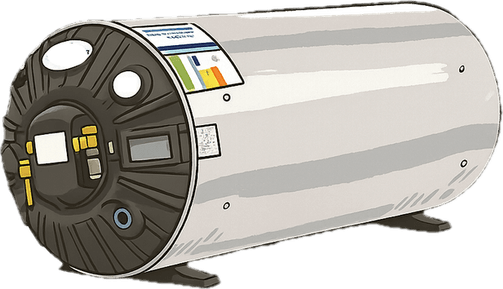
What type of system do you have?
This decides which cylinders we can actually supply, so the brands you are shown later are only ones that exist for your system.
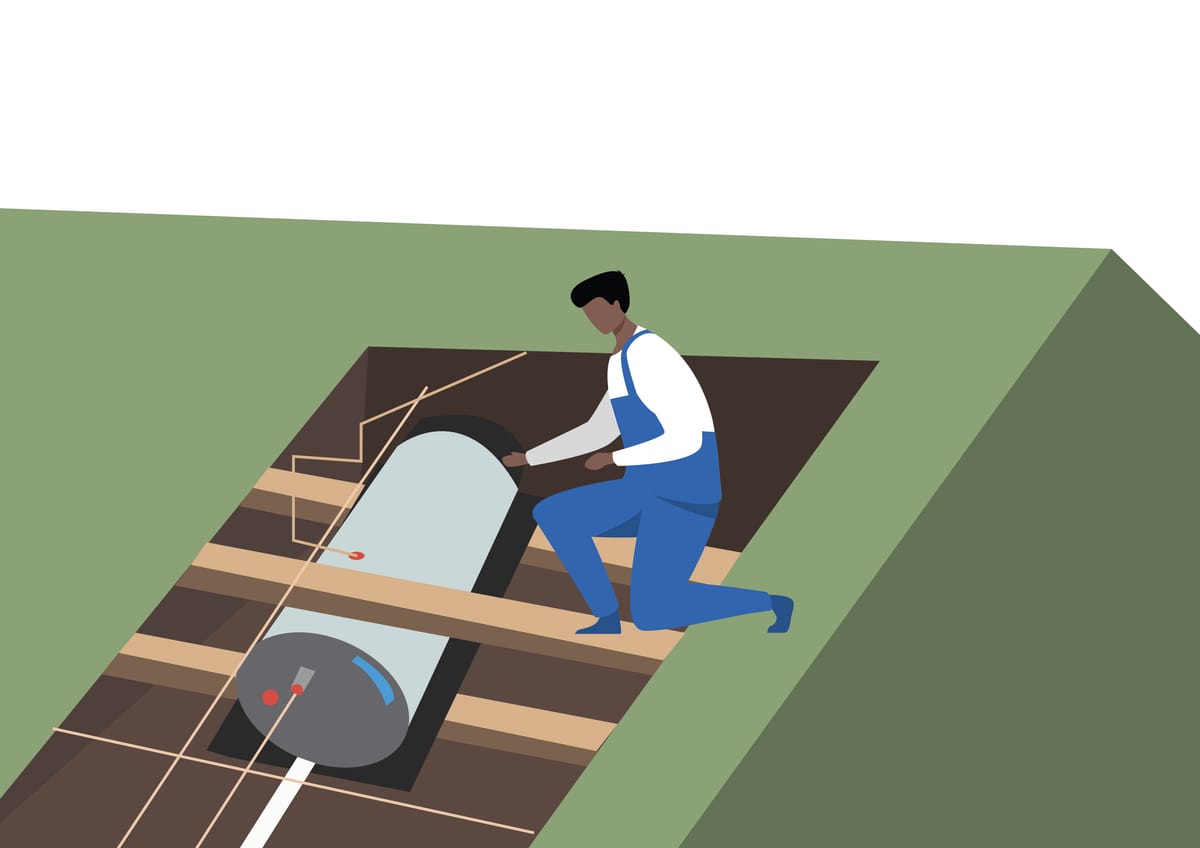
Where is the geyser?
Insurers and plumbers both call it a hot water cylinder, and customers call it a geyser. Either way, where it sits decides the access, the brackets and how many people we send.
What size do you need?
Drag either slider. They move together, because the useful question is not how many litres you want but how many people have to shower.
The standard allowance is roughly 35 to 50 litres of hot water per person. In practice your household’s habits matter more than the arithmetic. If everyone showers at once, size up. If showers can be staggered, a cylinder reheats in about an hour and a smaller unit will serve more people comfortably. Households that leave for work and school at the same time should size up.
Choose your cylinder
Four cylinders we fit and support. If you have no view on this — and most people do not — say so and we will recommend one for your system and capacity.
Why the warranty matters more than the price
A five-year warranty is only worth what the manufacturer will actually honour. The most common reason a geyser warranty is voided is that the original installer did not install the cylinder to the manufacturer’s diagram and to the national standard — which means the homeowner ends up buying a second geyser before the first one’s warranty has even expired. Home Assist installs to the manufacturer’s specification and issues a certificate of compliance on every job, so the warranty stays intact.
The geyser is usually the largest single item on a South African electricity bill.
What it costs you, and what a scheduler or a solar supply actually saves, is a separate decision from which cylinder to fit.
Your specification, and where to send it
This is everything you have chosen. Change anything that is wrong, then send it to us — the person who picks it up will already know what your installation needs.
Nothing here is compulsory. Anything you skip we will ask about when we call, and the rest still saves the visit.
Excludes pipe rerouting beyond the existing point, ceiling or roof repairs, structural access work, and electrical work beyond the isolator. The scope and the final price are confirmed on site before any work starts.
Sending this to someone else in the household? Copy a link to this specification — it opens with every answer already made.
Same day depends on arriving with the right cylinder
Send us a photograph of the plate and we will tell you where you stand.
What people ask before replacing a geyser
A standard replacement is normally done in one visit of about three to four hours, and we can often do it the same day. What turns one visit into two is arriving without the right cylinder or without access — which is exactly what the questions on this page are for. Tell us the system type, the position and the access up front and the team arrives with the right unit, the right brackets and the right number of people.
Water going somewhere it should not?
A geyser that has burst is one problem. Water appearing with no obvious source is a different one, and it is found rather than guessed at.