
Your geyser is the biggest thing on your bill. Control it.
Four ways to spend less on hot water — one changes where the energy comes from, three change when and how hot the element runs. They solve different problems, and this page says which is which rather than ranking them on one list.
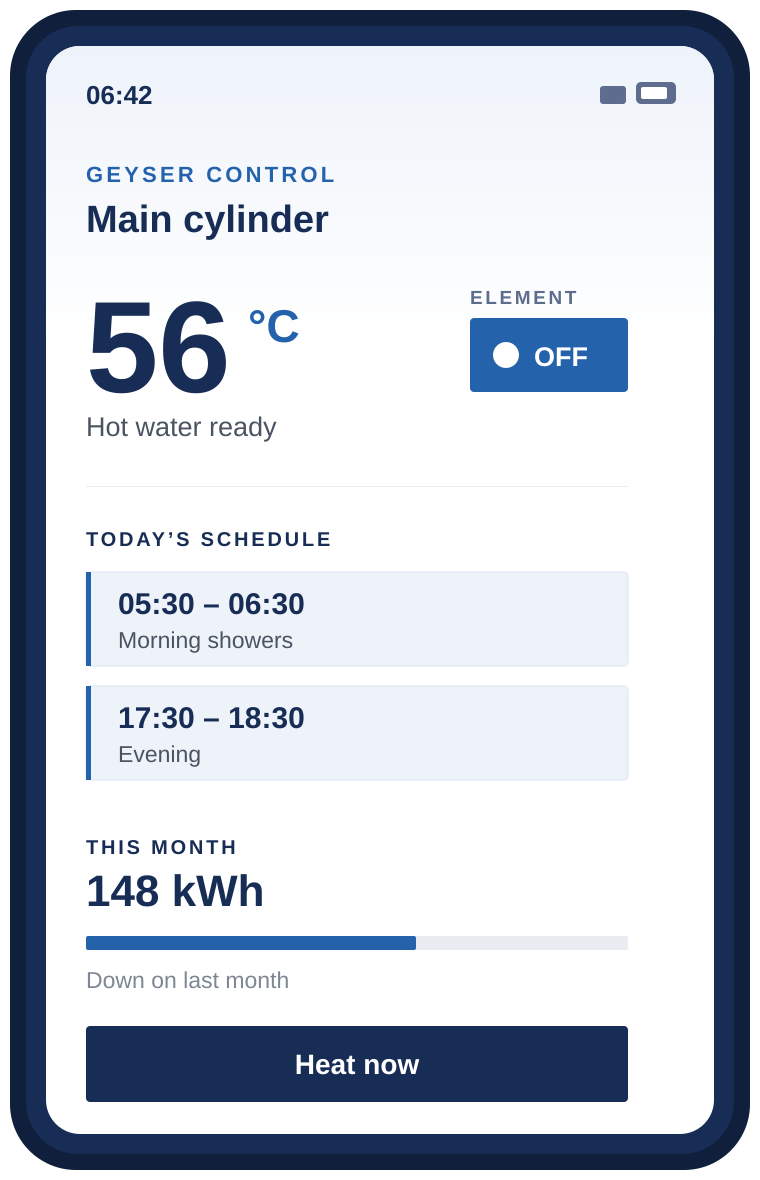
Illustration. Each device has its own app and its own screens.
An uncontrolled geyser heats water nobody asked for
Nothing here is exotic. It is the same cylinder you already own, switched more sensibly.
A 150 litre cylinder with a 3 kW element is roughly 13 amps at 230 volts, and it heats whether anyone is home or not.
A thermostat only knows the water is cold. It does not know that nobody will use it until seven tomorrow morning.
A full reheat is roughly R20 to R30 today. The arithmetic that made an uncontrolled geyser tolerable a few years ago no longer does.
Four products, and one real difference between them
All four put your geyser on a schedule. Three show it to you on a phone; the Geyserwise Max does it on a keypad on the wall, with no Wi-Fi to drop. Only the Elon changes where the energy comes from, and that is the decision worth making first — everything else follows from it.
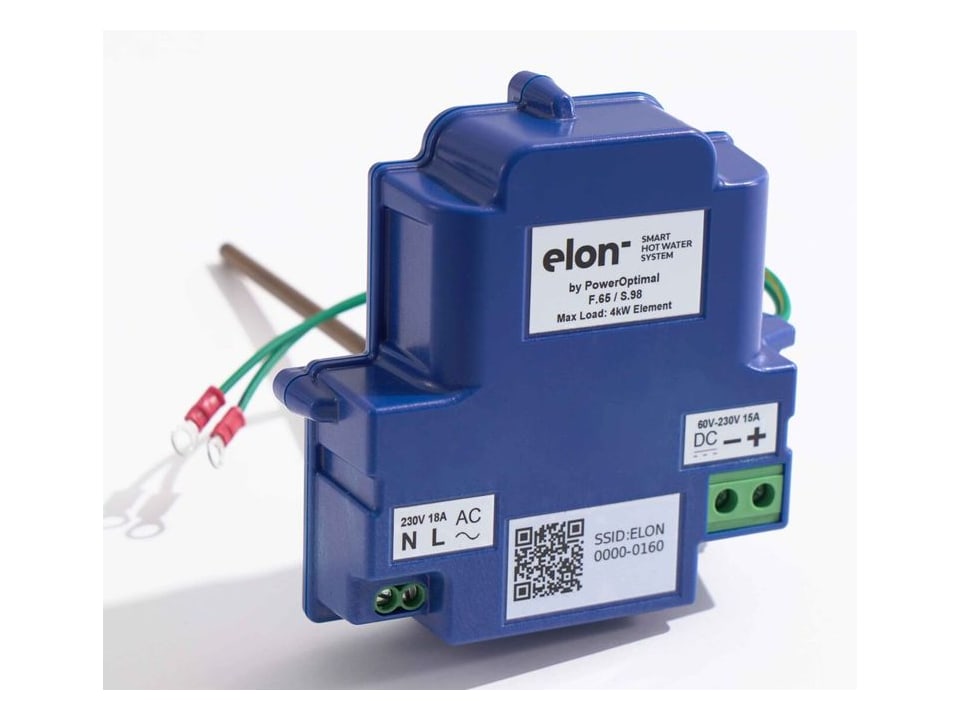
Kwikot Elon Smart
Made by PowerOptimal, sold through Kwikot
Feeds DC current straight from photovoltaic panels to a standard geyser element, with mains AC as backup — and schedules and monitors the cylinder from a phone.
- No inverter and no battery — the panels connect to the element directly
- Schedules the element and reports on it from a mobile app
- Reads the cylinder temperature, and alerts early on faults — element failure, hot connections, incorrect wiring
- Runs completely off-grid, or on AC as backup
- Accepts a solar array up to 3 kW, at 30 to 230 V DC, with over- and undervoltage protection
R3,500 to R4,000 for the unit, indicative and excluding panels.
No monthly cost.
Plentify HotBot
Made by Plentify, South Africa
A small controller fitted at an existing geyser that puts the element on a schedule and reports what it is doing, from a phone.
- Schedules and controls heating around your household routine
- Monitors cylinder temperature in real time
- Detects a potential leak before it causes damage
- Load-shedding aware, and a vacation mode
- Optimises for solar hours on compatible systems
R849 excluding VAT, once off.
R149 per month thereafter. Additional units R99 per month. Plentify offers a 60-day free trial.
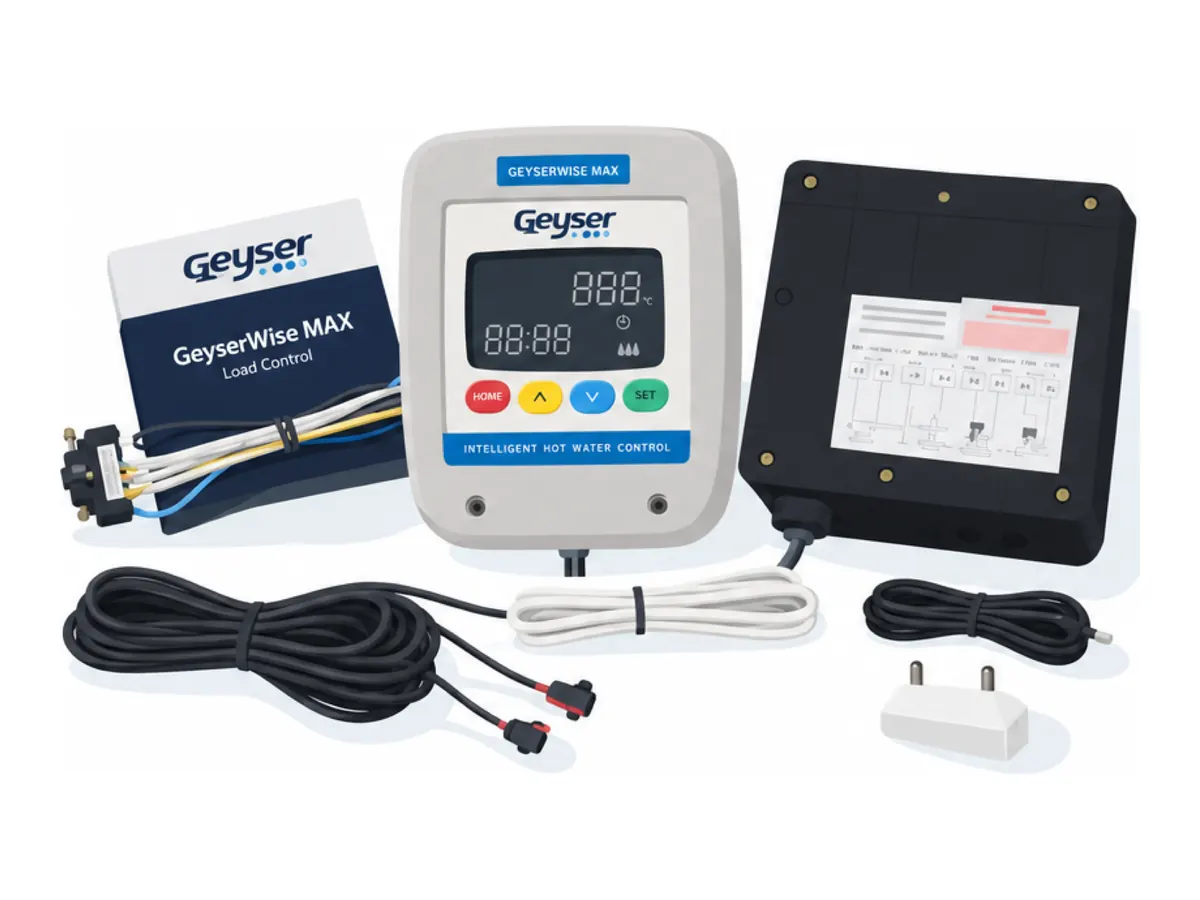
Geyserwise Max
Made by Geyserwise, South Africa
An electronic geyser thermostat and timer with a keypad display on the wall. You see the water temperature at a glance and set when, and how hot, the geyser heats.
- Shows the water temperature, time, day, heating mode and any fault on the display
- Daily programmable timer with four time settings
- Temperature set anywhere from 30 to 75 °C, with a factory default of 55 °C
- Flags faults with an error code, and has a mechanical safety cut-out at 90 °C
- Doubles as the controller for a pumped solar water heating system, switching the circulation pump
- A 30 A relay, for elements up to 4 kW
Around R1,700 retail for the unit, indicative.
No monthly cost.
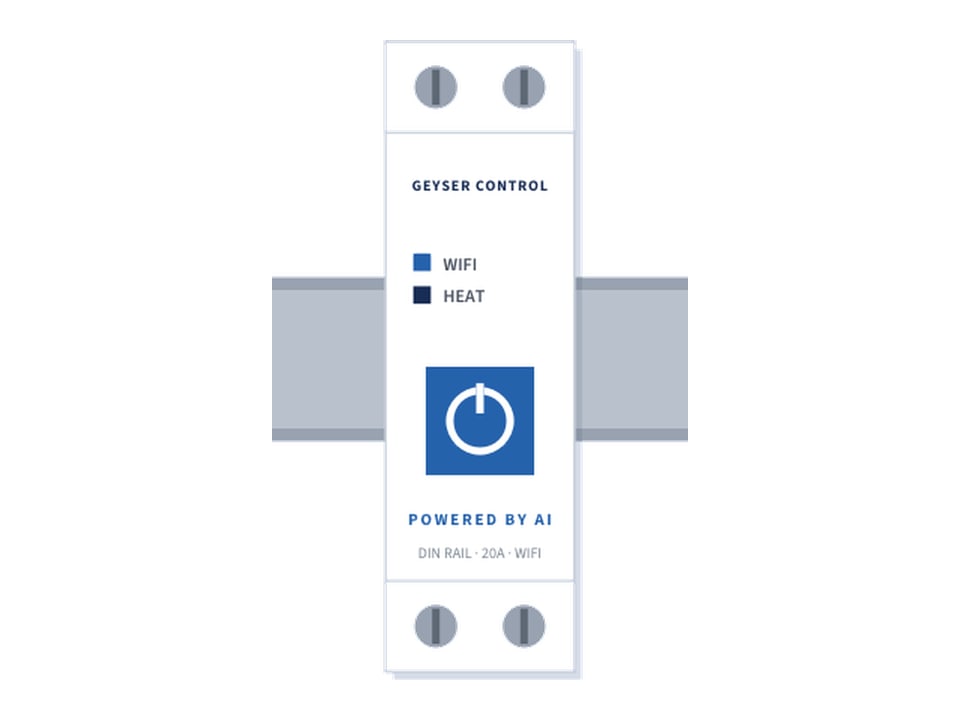
Distribution board geyser controller
Supplied and installed by Home Assist
A compact smart breaker fitted inside your distribution board by a qualified electrician. No plumbing changes and no mess — installed in under an hour.
- Puts the geyser on a schedule so it heats outside peak tariff hours
- Learns the household routine, so hot water is ready when it is wanted
- Wi-Fi, on a 32 A double-pole DIN rail unit that clips into the existing board
- A physical button on the face of the unit
- Tracks live power and energy use, with daily and monthly history in the app
- Logs a warning on a leak or a component fault, and routes it to an installer
R400 to R650 excluding VAT for the unit, indicative.
No monthly cost.
Home Assist team members have fitted, run and tested the Elon Smart, the HotBot and the distribution board controller in their own homes, and the Geyserwise Max is the controller we fit on solar water heating installations. That is the bar for being on this page: we have watched them cut our own bills, and we know they do what their manufacturers say they do.
Each one is approved for safe use in a South African home — Wi-Fi devices are type-approved by ICASA and the hardware meets NRCS compulsory specifications — provided the installation is done properly. That is what a Home Assist installer is for: a certificate of compliance is issued for the distribution board controller, and for any photovoltaic connection.


Whichever one you pick, Home Assist supplies the device, sends the right trade for it — plumber, electrician or PV Green Card installer — and handles the certificate of compliance where one is needed. We check the geyser it is going onto before we fit anything, and we manage geyser installations for South African insurers every day, so the installation is done the way an assessor expects to find it.
Have Home Assist install itHardware prices above are indicative ranges for the unit only, and they move with stock and with the exchange rate. Installation is quoted separately once we know what your board and your cylinder look like.
Where an electrician is required, expect a certificate of compliance to be charged for as well. That is not us adding a line — an electrician who touches your distribution board has to issue one, and it is the document that protects you afterwards. A device fitted by a plumber alone, at a cylinder that already has an isolator, does not attract that cost.
Savings figures are published claims — the manufacturers’ own for the Elon Smart and the HotBot, and an independent 2026 guide for the distribution board unit — and each badge links to its source. We have not found a published savings figure for the Geyserwise Max, so its tile does not carry one. What any of them saves in your house depends on your tariff, your household’s habits and, for the Elon, on your roof and panel array.
What each one actually does
The first row is the same for all four. The rows worth reading are the PV input, load-shedding and what happens when the connection drops.
| Elon Smart | Plentify HotBot | Geyserwise Max | DB breaker | |
|---|---|---|---|---|
| Puts the geyser on a schedule | Yes | Yes | Yes | Yes |
| Controlled from a phone | Yes | Yes | With Wi-Fi upgrade | Yes |
| Reads cylinder temperature | Yes | Yes | Yes, on the keypad | No |
| Detects a leak | Fault alerts | Yes | Fault codes | Limited |
| Takes DC directly from PV panels | Yes | No | No | No |
| Runs through load-shedding | Only with PV fitted | No | No | No |
| Needs Wi-Fi | Yes | Yes, within 10 m | No | Yes |
| Works if connectivity fails | Yes, with mobile app | Yes, backup connection | Yes, keypad on the wall | Yes, press the button |
| Fitted at | The cylinder | The cylinder | The cylinder, keypad on the wall | The DB board |
| Who installs it | Plumber | Plumber | Plumber | Electrician |
| Indicative hardware | R3,500 - R4,000 ex VAT | R849 ex VAT | About R1,700 retail | R400 - R650 ex VAT |
| Monthly cost | None | R149 | None | None |
Elon Smart and HotBot rows are from the manufacturers’ published product information, and distribution board breaker rows from the Sonoff BASIC-1GSP product information, read in September 2026. Geyserwise Max rows are from published Geyserwise product information, read in October 2026.
What it actually saves, and what that depends on
Anybody who quotes you a single savings figure without asking these four questions is guessing. Here is the honest version.
The same saving is worth far more in a municipality at R4.50 a unit than at R2.50. This is the biggest single variable and it is the one nobody in this conversation controls.
A house already generating its own power in the middle of the day is solving a different problem, and a scheduler that heats at noon may save very little on top of it.
An uncontrolled cylinder reheats whenever it cools, all day and all night. Almost all of the saving on this page comes from stopping that.
Shorter showers, staggered showers, a lower thermostat setting. The device makes the change easy. It does not make it for you.
Two people, a 150 litre cylinder, and a simple scheduler set to come on for an hour in the morning and an hour in the evening. At September 2026 tariffs that saves in the region of R300 a month.
Change any one of the four things above and that number moves. A larger household saves more in rand and less in percentage. A house with solar PV may save very little on top of what it already generates. A household that does not change how it showers gets the scheduling saving and not the rest. We would rather tell you that than quote a range you will not reach.
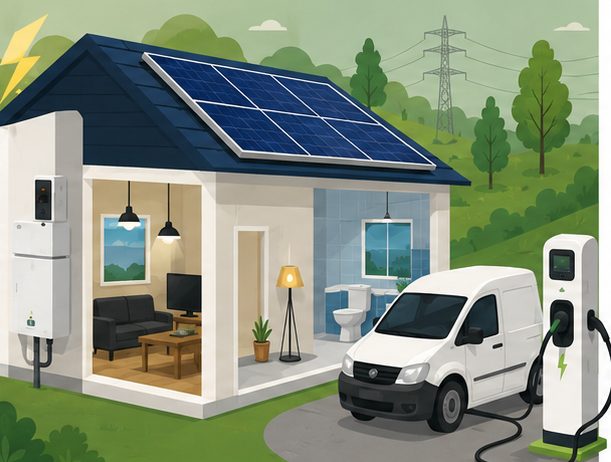
Illustration. Solar on the roof changes the arithmetic — see the Elon Smart above.
Tell us your household size, your cylinder and roughly what you pay for a unit of electricity, and we will work through your own numbers with you rather than repeat this one.
Who is allowed to fit it, and what that costs
The three devices that sit at the cylinder are plumbing work, provided your geyser already has an isolator. No electrician, and no certificate of compliance charge.
The electrical point has to be within one metre of the cylinder, and a dedicated breaker on the board has to isolate the geyser completely — which a compliant installation already has.
The distribution board unit is electrical work, so an electrician fits it. Anything that touches your board is.
Where an electrician is involved, expect a certificate of compliance to be charged for. It is a real document with a real cost, and it is what protects you if something goes wrong later.
Connecting photovoltaic panels is its own trade. It needs a PV installer electrician, and that work is certified through the PV Green Card scheme.
Home Assist can arrange that step rather than leaving you to find somebody.
Before we fit any of these we look at the installation it is going onto. A schedule on a cylinder with no working pressure control or no vacuum breakers is a schedule on a problem. If something is missing we tell you what it is and what it costs to put right, separately from the device you came for.

Illustration. Solar on the roof, the geyser on a schedule, and the bill on your phone — the ordinary house is already headed this way.
Send us your geyser and your bill, and we will say which of the four is worth it.
What people ask before fitting one
All four schedule the geyser, so that is not the deciding question. If the bill is the problem and you have roof space, the Elon is the only one that takes water heating off the grid, and it is the biggest single change of the three — but it needs panels, and those are a separate cost and a separate trade. If you want scheduling, temperature and leak detection without going near a roof, the HotBot does that for the lowest upfront cost. If you want the simplest thing, no plumbing work at all and a button you can press when the Wi-Fi is down, the distribution board unit does that. If you want to see the water temperature on the wall and set it without an app — or you have, or are adding, solar water heating — the Geyserwise Max does that.
Replacing the geyser as well?
If the cylinder itself is on its way out, fit the control at the same time — the labour is already there and the installation only gets opened once.