
Fair bills start with a meter per home, read every day.
A small device on each meter sends its reading to our platform several times a day — no Wi-Fi, no meter reader at the gate, no estimate. One device reads two meters where water and electricity sit together; a sealed five-year unit handles a single meter. This page explains how the pieces fit and which device suits which home.

Illustration.
The bulk meter problem
Most homes just want the bill to be right. In complexes, clusters and estates it goes further than that — one meter at the gate means nobody knows who used what, and everybody suspects they are paying for the neighbour.
In a complex, a cluster or an estate, the municipality reads one meter at the gate. Everything behind it — every geyser, every aircon, every dripping toilet — lands in one number the trustees must somehow split fairly.
Split by unit size or levy share, the careful household subsidises the wasteful one, and every month ends in the same argument. A meter per home replaces the formula with a reading.
A spotlight left burning, an aircon that runs every night, a leak ticking over at 2am. On a monthly bulk bill these are invisible. On a daily per-home reading they stand out in a week.
A smart meter is four pieces, and we say so up front
People ask for a smart meter as if it were one gadget. It is a measuring meter, a reader on that meter, a network, and the platform that turns readings into bills. Knowing that is what stops surprises at quote time — because if your existing meter is too old to be read, the meter comes first and the smart part clips on after.
The measuring instrument itself — a mechanical or ultrasonic water meter, or an electricity meter with a pulse output. If yours is too old to talk to anything, we supply and fit one first.
A small battery-powered device wired to the meter, up to five metres away. It counts every pulse the meter sends — no dials to photograph, no gate access needed.
Readings travel over a low-power national network built for meters. Nothing connects to your Wi-Fi, and there is no SIM card to manage per device.
Readings land on the Home Assist metering platform automatically, several times a day. That is what turns one bulk bill into a correct bill per home — and what makes a leak visible.
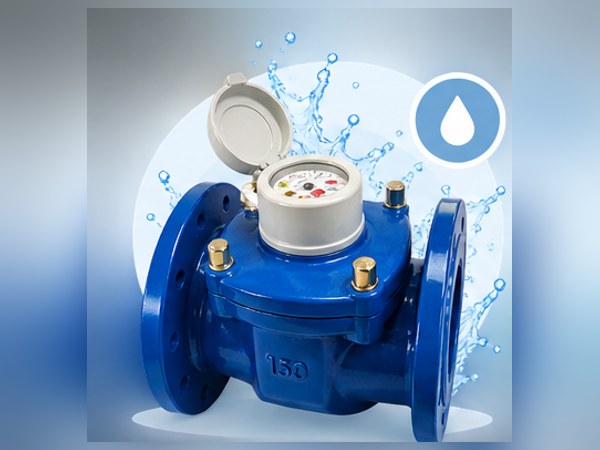
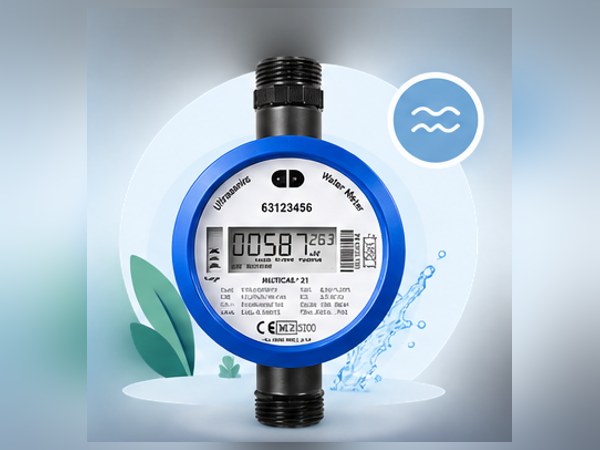
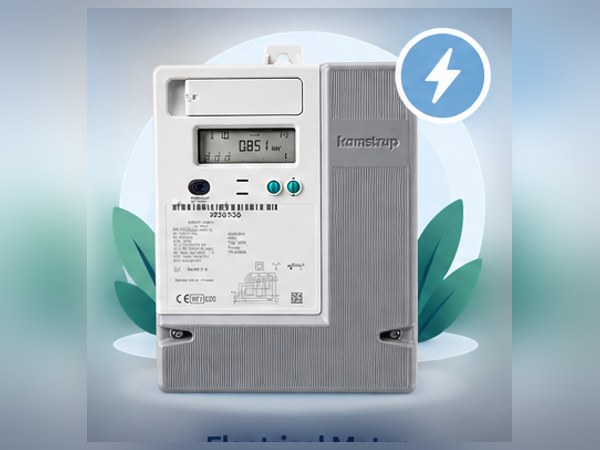
The reader wires to the meter’s pulse output, up to about five metres away. Meters without a pulse output can usually take a small retrofit reed switch that picks up the rotation instead — several mounting options exist to suit different meters, and the right one is chosen at the site survey.
Only a meter that is genuinely too old or damaged gets replaced — and then the new meter is a once-off that every future reading rides on.
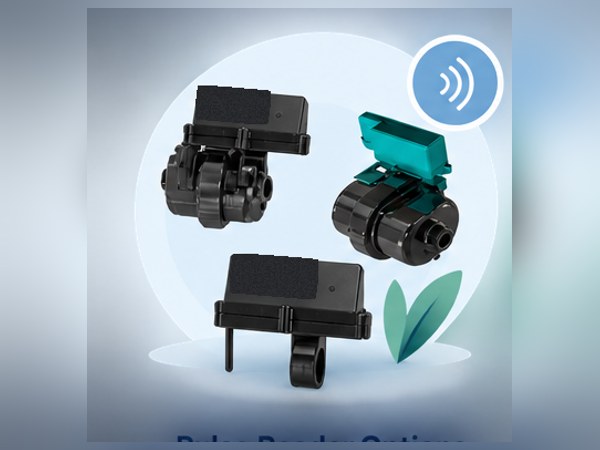
Retrofit reader mounts for existing meters. Supplier photography, shown unbranded.
Two devices, and an honest line between them
One is a hub that reads two meters at once — the comprehensive option where water and electricity sit within wire reach of each other. The other is a sealed single-meter unit that does one job for up to five years on a battery. Neither is the upgrade of the other; they fit different sites.
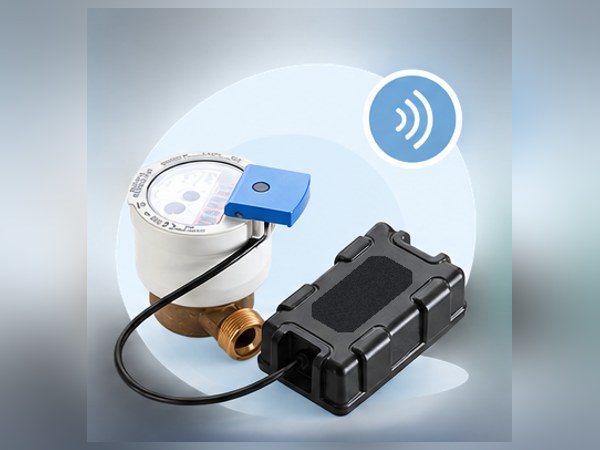
Supplier product photography, shown unbranded — reader wired to a standard residential water meter.
Smart Metering Hub
One device with two inputs, read simultaneously — water and electricity together, or any two meters within wire reach of each other. The comprehensive option for a home or a complex metering both services.
- Reads two meters at the same time — typically one water and one electricity
- Both meters must be within about five metres of the device
- Works on the same low-power network as the single-meter unit, with no household Wi-Fi needed
- Can be factory-configured for other networks where a site demands it — including Wi-Fi, which then runs off USB-C power with a backup battery
- Optional external antenna for cupboards, basements and meter boxes — specified when we order, because the connector is fitted in the factory
It is not a second electricity dispenser and it does not switch anything on or off — it reads what your meters measure and reports it. If the two meters are further than the wire allows, the honest answer is two single-meter units, and we will say so.
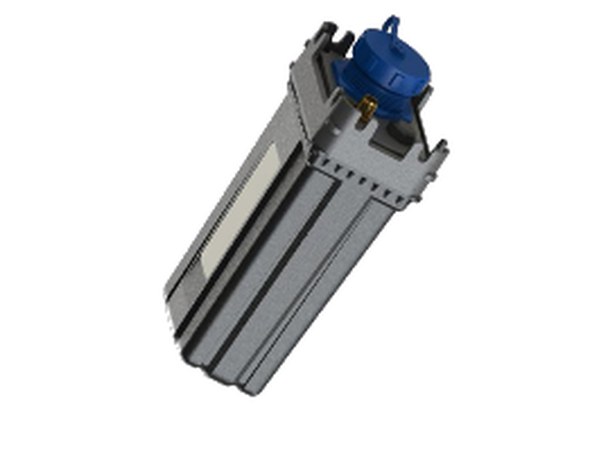
Supplier product photography, shown unbranded. High-resolution imagery to follow from the supplier.
Smart Water Meter Unit
A sealed, battery-powered unit for a single meter — the right answer for most standalone homes and for complexes metering water only. Fit it and forget it.
- Reads one meter — built for the standard residential water meter
- Sealed battery lasting up to five years at three readings a day
- No household Wi-Fi, no SIM, no charging — it transmits on its own network
- Battery is replaceable by a technician at the end of its life, without replacing the unit
- Optional external antenna, specified when we order — the connector is fitted in the factory and cannot be added afterwards
One input means one meter. If you want water and electricity read together at the same point, that is the hub above. And battery life depends on signal: a device straining to transmit from a deep basement drains faster, which is exactly why we test the signal before we install.
Because an honest metering quote is per site, not per gadget: it depends on how many meters you have, whether they have pulse outputs, how far apart they sit, what the signal at the meter actually measures, and whether an external antenna must be specified at the factory. We quote after the survey, with the hardware, the installation and the monthly billing each on its own line.
Which device fits your site
The rows that decide it are the first three: how many meters, whether they sit together, and what has to be read.
| Smart Water Meter Unit | Smart Metering Hub | |
|---|---|---|
| Meters it reads | One | Two, simultaneously |
| Water metering | Yes | Yes |
| Water and electricity together | No | Yes, within wire reach |
| Needs your home Wi-Fi | No | No |
| Network | Low-power meter network | Same, plus factory options including Wi-Fi |
| Power | Sealed battery, up to 5 years | Battery; USB-C power for the Wi-Fi option |
| Distance to the meter | Up to about 5 m | Up to about 5 m per meter |
| Older meter, no pulse output | Retrofit reed switch | Retrofit reed switch |
| External antenna option | Yes — decided at order | Yes — decided at order |
| Best for | A single home or water-only metering | Water + electricity, or two meters close together |
Specifications from the supplier’s product information and our product alignment review with the supplier, October 2026. Battery life is the supplier’s rating at three readings a day with adequate signal.
We test the signal at your meter first
Coverage maps show outdoor signal. Meters live in cupboards, steel boxes and basements.
We measure signal quality at the meter itself — not at the gate, not off a map — before any hardware is ordered. Indoor and below-ground meters are exactly the sites where a desk estimate gets it wrong.
Where the reading is marginal, the device is specified with an external antenna. That connector is built in at the factory and cannot be added in the field later — which is why the survey comes before the order, not after the complaints.
A device with poor signal retries its transmissions, and retries eat the battery that was rated for five years. Getting the signal right on day one is what makes the five-year number honest.
Surveyed, installed and billed by Home Assist
We survey the site, choose the right reader for each meter, fit it, and confirm every device is transmitting before we leave. Swapping a reader onto an existing meter takes minutes per unit; the meter itself stays in place.
Then the part that matters every month: readings land on the Home Assist metering platform automatically, and we run the bill cycle — a correct statement per home, from that home’s own meter. Body corporates on our platform have run their billing this way for years.
And because the same readings arrive every day, the platform sees what a monthly bill never shows: the overnight flow on a unit that should be flat. That is a leak caught as a phone call, not as a ceiling.

Illustration.
Tell us how many meters you have and where they live, and we will take it from there.
What people ask before metering a property
No. Both devices transmit on a low-power radio network built specifically for meters, so there is nothing to connect to your router, no password to update and no SIM contract per device. The hub can be factory-configured for Wi-Fi where a site genuinely needs it, but that is the exception — it then needs permanent USB-C power — and we will tell you if your site is one.
Metering is half of it
The same visit that puts a reader on your meter can put your geyser on a schedule — and if the readings ever show overnight flow, leak detection is the next call.